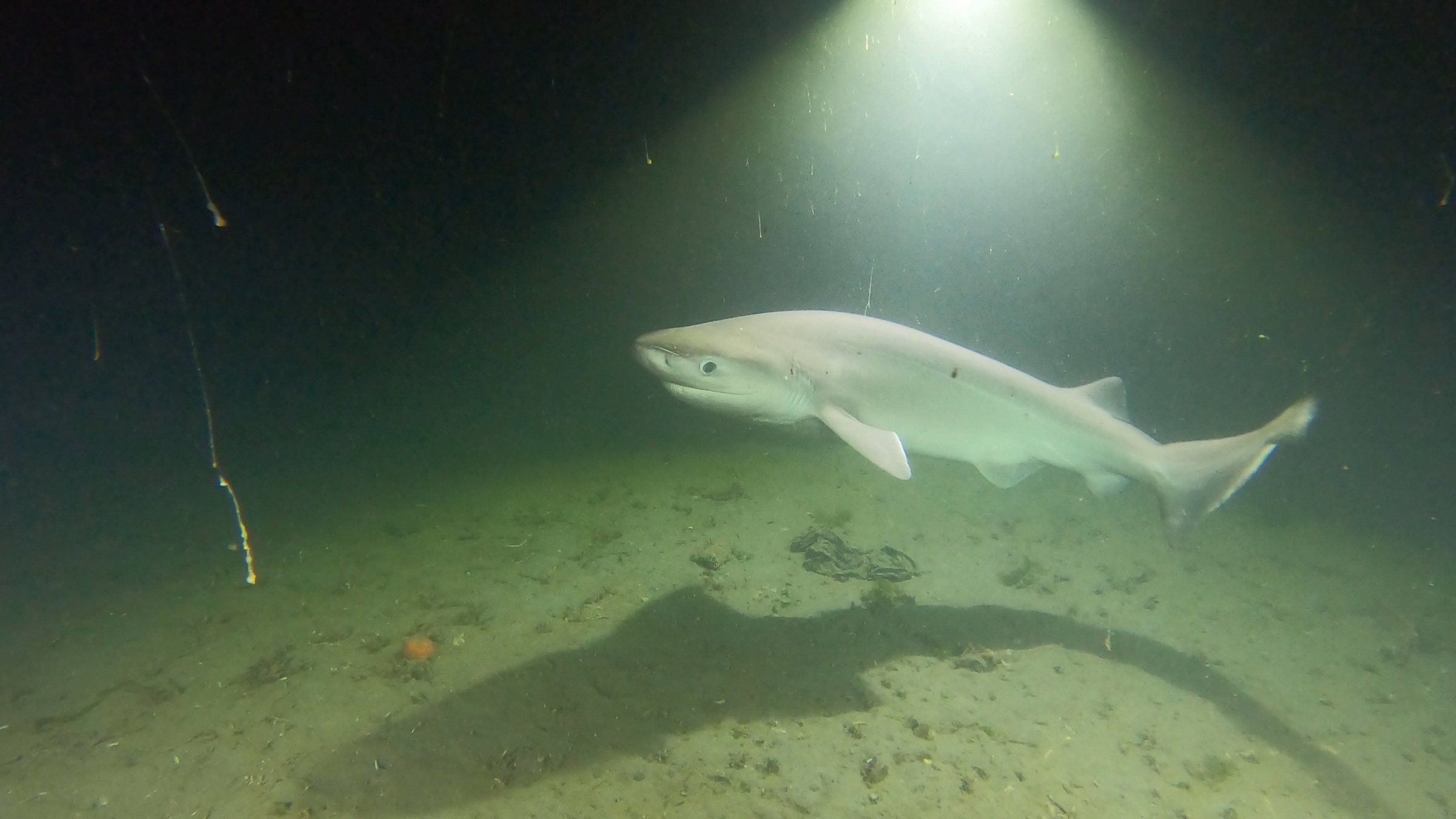
Every sixgill has a face. We learn them one fin at a time.
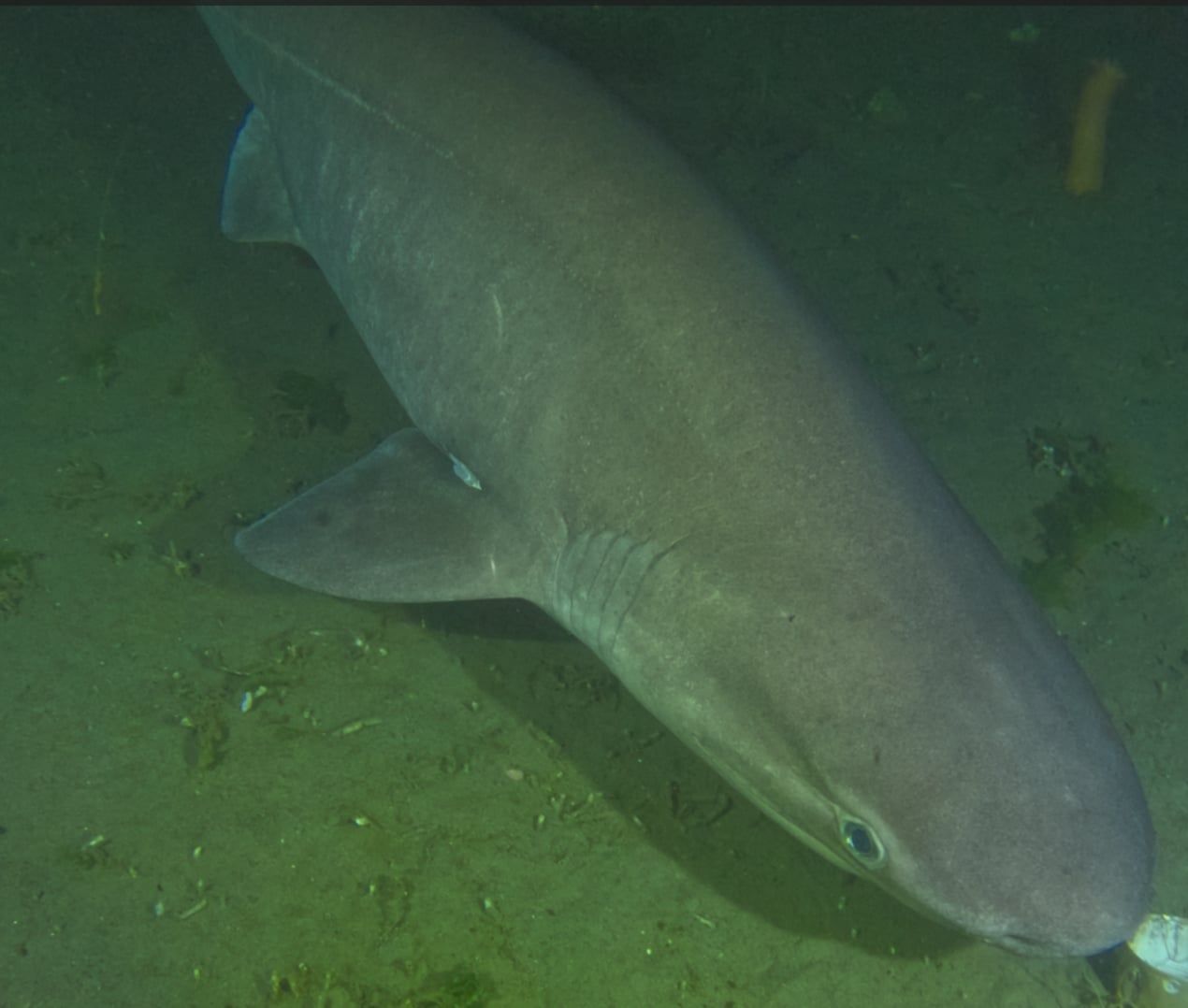
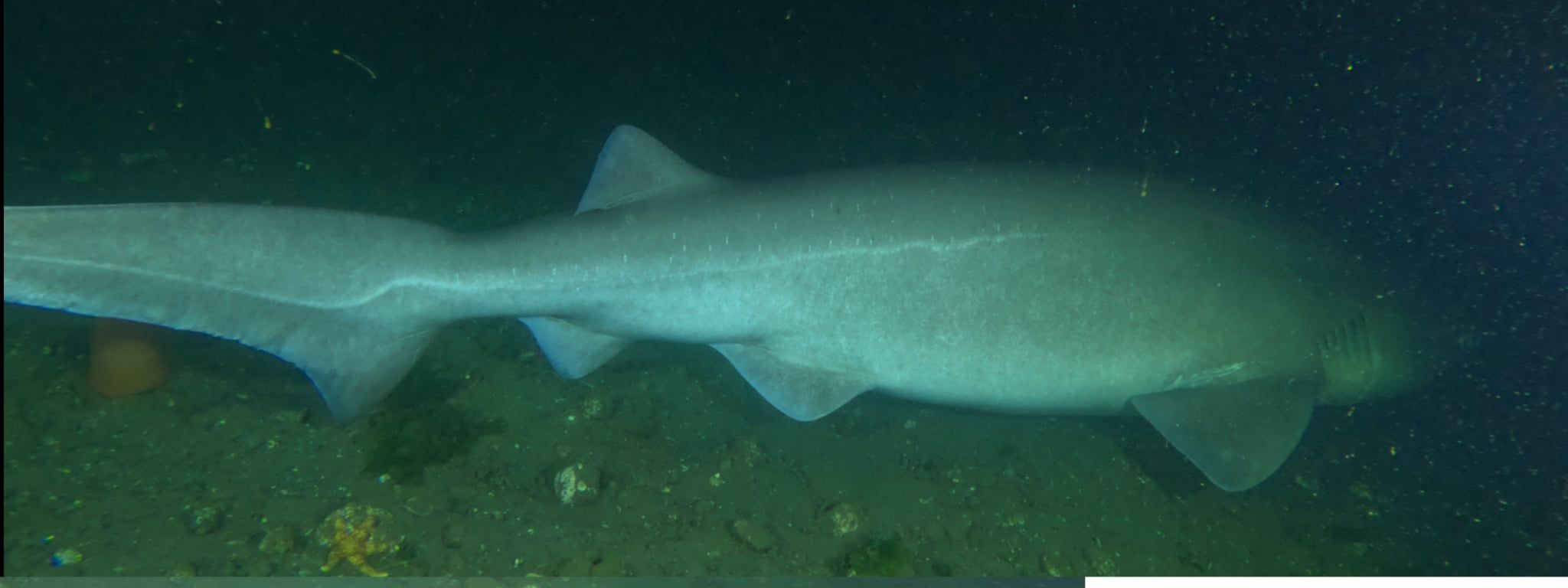
Bluntnose sixgills ascend from the deep into diveable water each summer. Divers film them; we match the notches and scars on their fins to tell one shark from another, and track who comes back.
- Shark IDs in the catalog
- 151
- Dive sites
- 15
- Sighting records
- 2018–2026
New in 2026
All 32 sharks from 2026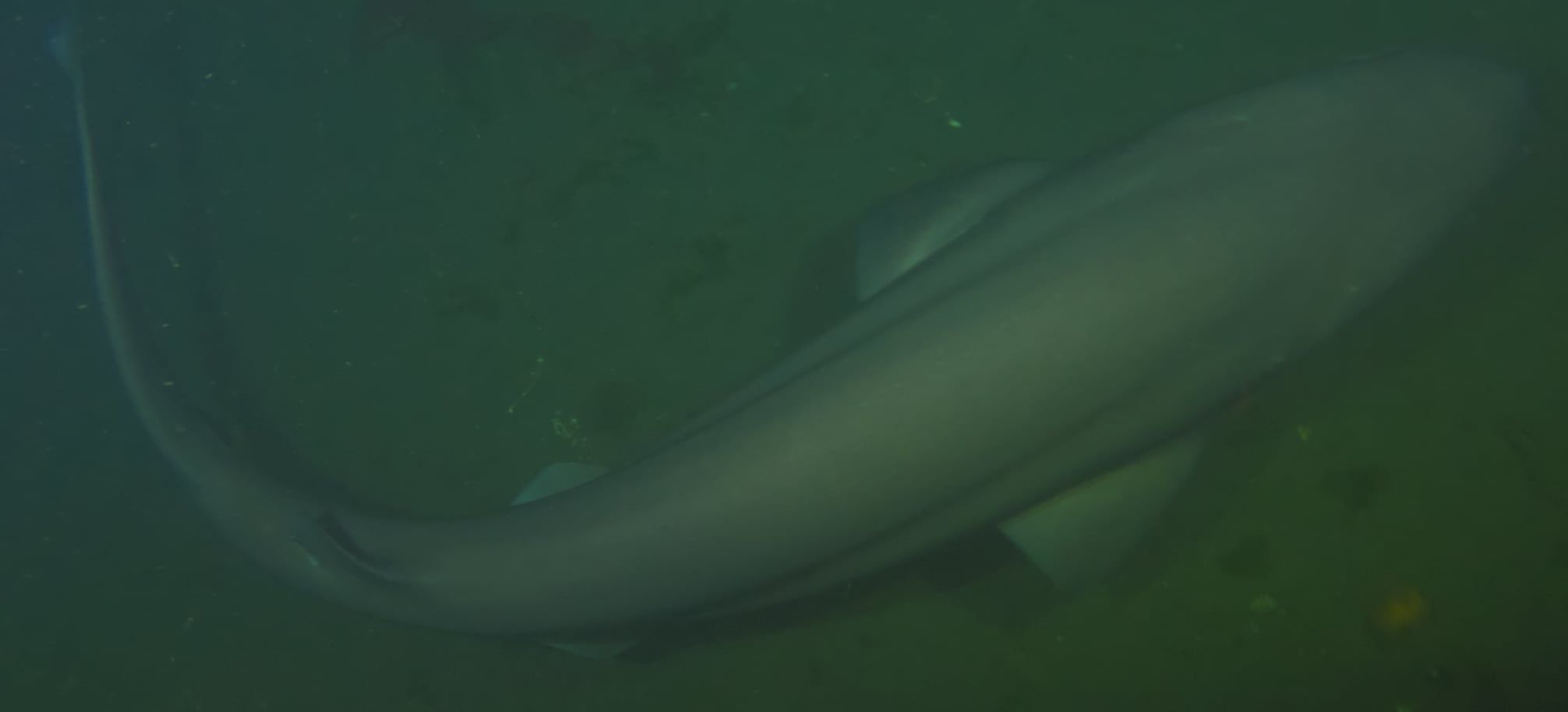

Where we find them
Most logged sightings come from Redondo. Hood Canal, Tacoma, and Alki add a few. Tap a dot to see the sharks from that site.
How a sighting becomes data
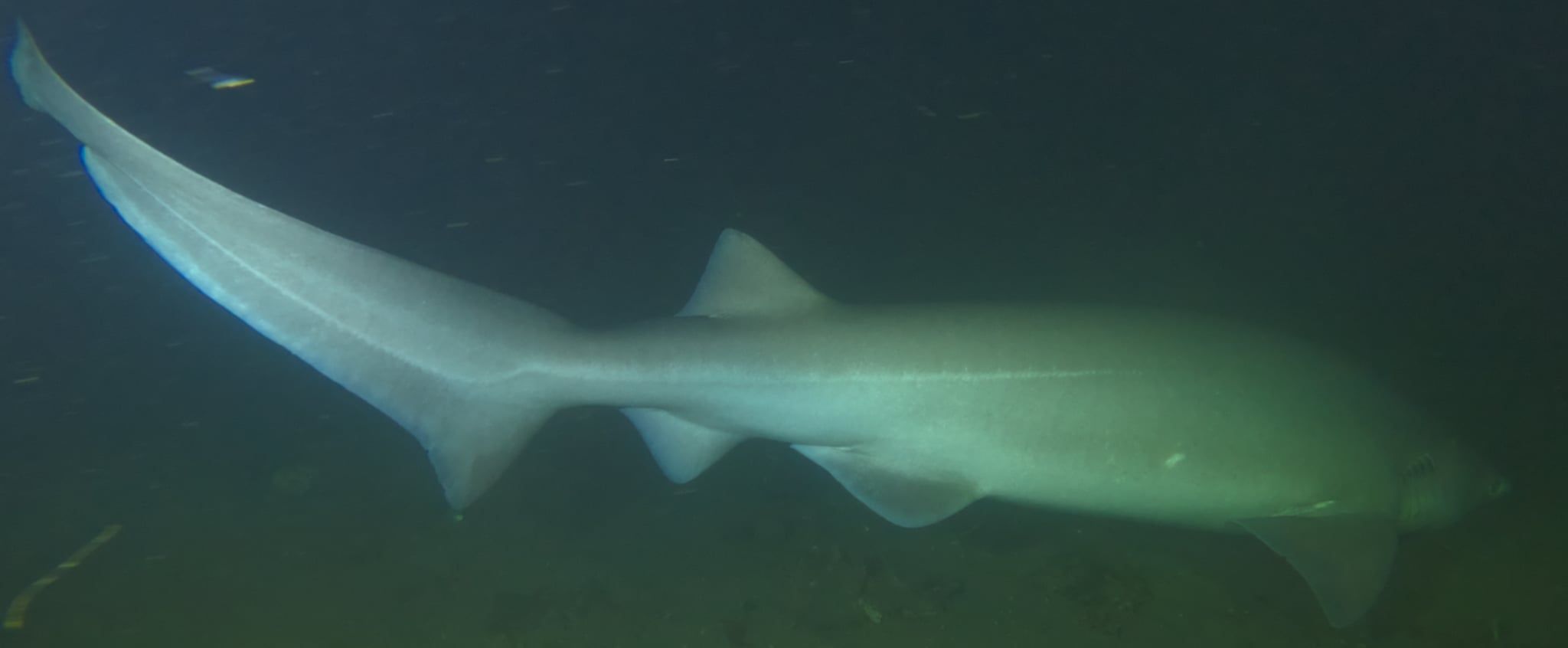
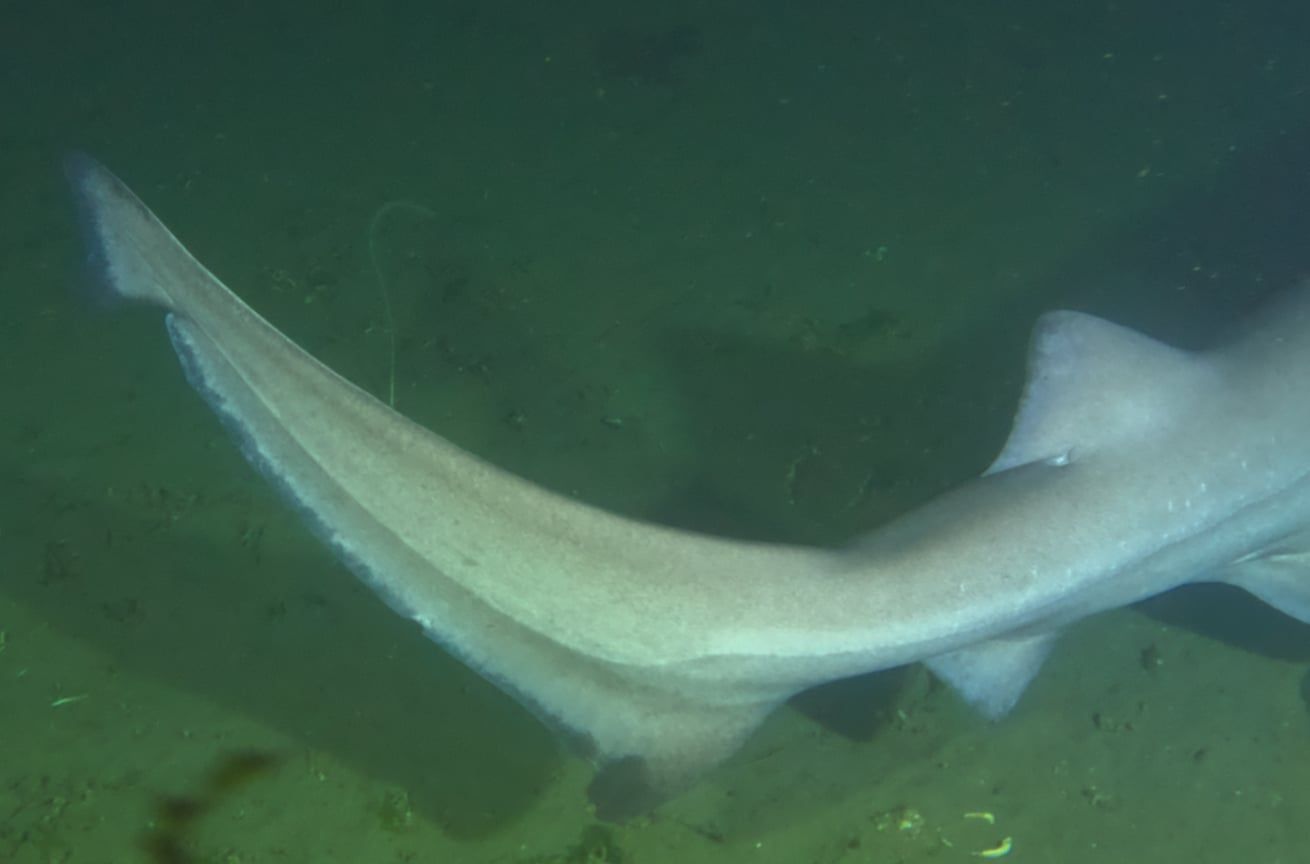
Film both sides
Keep your light off its eyes. Get the left and right flanks, the tail and the single dorsal fin. Marks only match side to side.
Filming tipsSend it in
Site, date, depth and a link to the video. About three minutes on the sighting form.
Open the formWe match it
A match adds to that shark's history. No match, and it gets an ID like SG-R-26-07, and whoever reported it first gets to name it.
See the catalog

Research
2026 annual report: Redondo sixgill sharks
A record year of sixgill dives and sightings at Redondo: the sharks that came back, the new ones, and what we want to try next.
Read the report